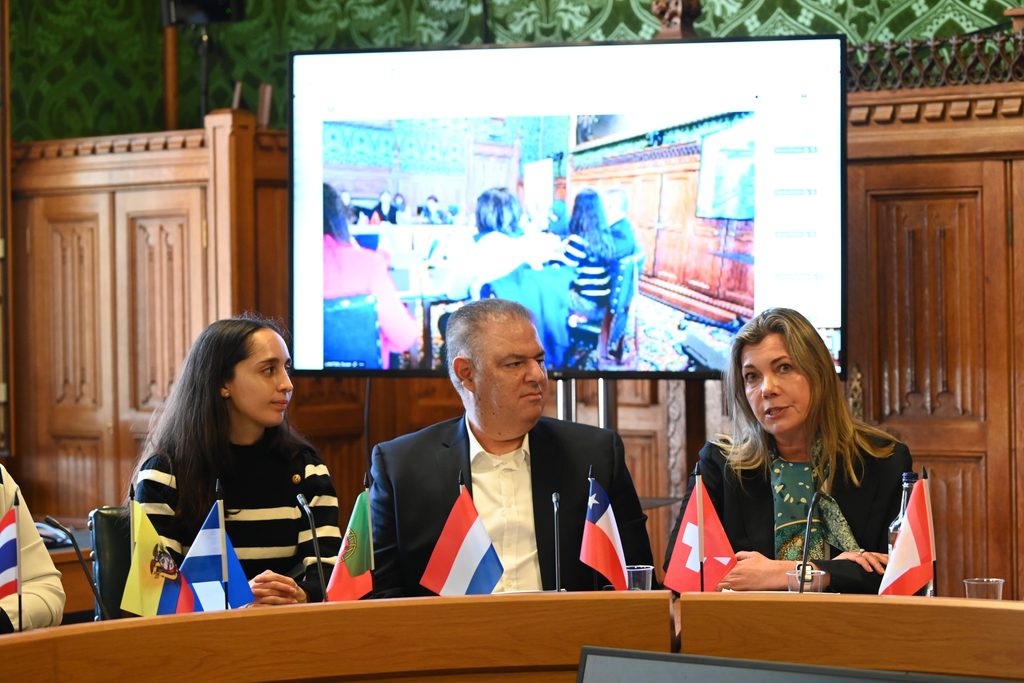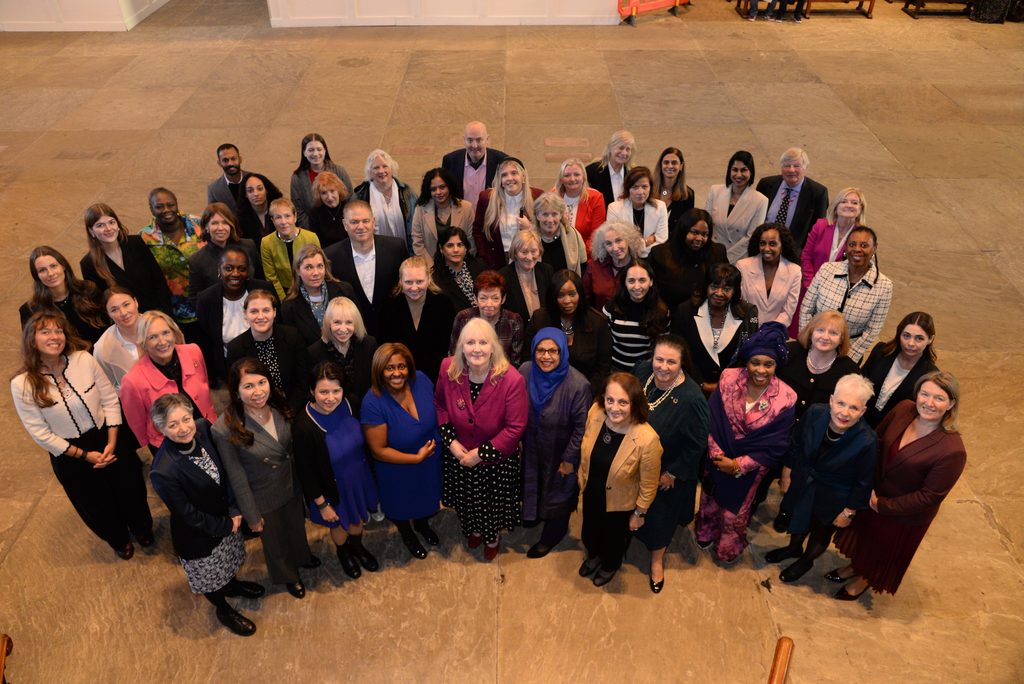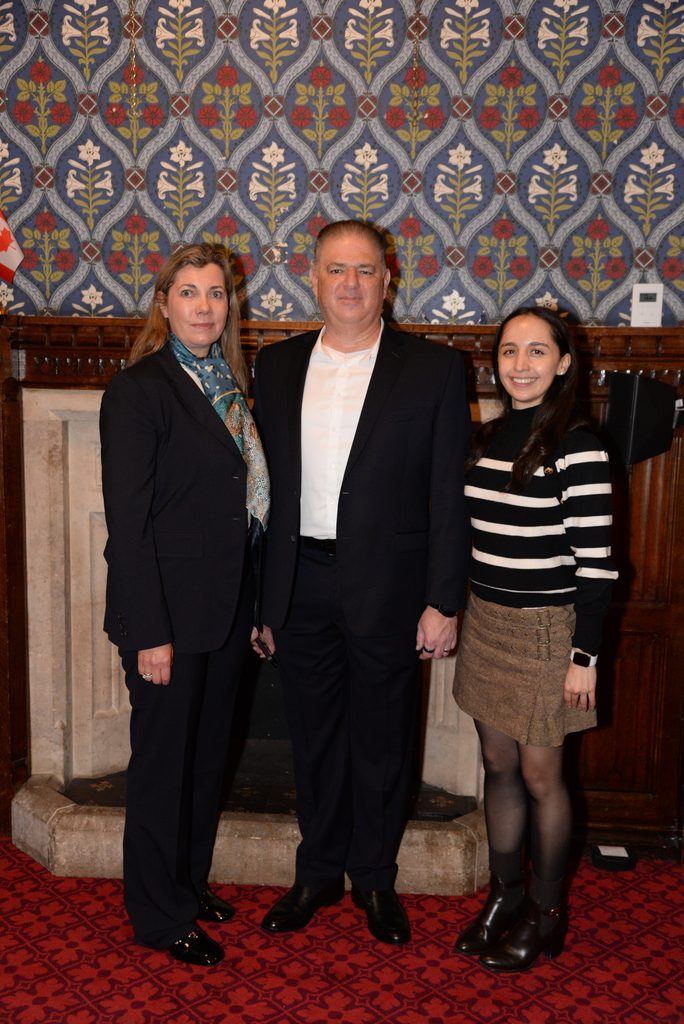
On October 22, I had the honor to speak at the UK House of Lords 🇬🇧 in London about AI Literacy Impact on cybersecurity for Small and Medium Enterprises (SMEs). This was part of the AI literacy research authored by Dr. Anastassia Lauterbach, which I got to contribute to, together with Elisa Torres Durney. Our presentation was part of World Business Women Summit 2026 organized by Savvitas and hosted by Baroness Manzila Uddin.
Here is my address to the house:
Lords, ladies and gentlemen, distinguished guests

My name is Yaron Levi, and I am a member of the AI Literacy research team that is led by the honorable Dr. Anastassia Lauterbach. I’m a technologist and a cybersecurity practitioner with over 25 years of experience. Thank you for the privilege of speaking here today.

Let me begin with why I am so hopeful.

AI is an equalizing technology. Any person with an idea, and no training in programming languages, can now describe in everyday words what they want and have software written for them. A student, a shopkeeper or a retired engineer can learn almost any subject, at any hour, at their own pace. Think about what that means for a young person in a small town with a big idea, or a grandmother starting her first business. That is a remarkable widening of opportunity, and I do not want us to lose sight of it.

But, I would be failing you if I stopped there, because every one of those capabilities has a second edge. Evan as AI lowers the barrier to building software, it also lowers the barrier to building malicious software. If it helps one learn about any subject, it can also help someone learn how to find weaknesses in a system. AI can generate a large volume of simple attacks, at machine speed, that overwhelm defenders. It can streamline attacks by people who, a few years ago, would not have had the skill to mount them. A larger population of people can do more harm faster with the aid of AI, and that’s a serious change.

Let’s consider who stands to lose the most due to that change. Small and medium-sized enterprises are the backbone of our economies. They employ millions, serve our communities and supply our largest institutions. Behind each one are real people: the owner who put everything into the business, the employees who count on a steady paycheck, the customers who trust them with their information.

These enterprises stand to gain a great deal from AI. Yet they rarely have a dedicated security team, a modest budget and little time to spare. They must prevent, detect and recover from incidents with far fewer resources than a large corporation. For them, a serious cyber incident is not an inconvenience. It can threaten the business, the livelihoods of its people, and the trust of its customers.

AI literacy is a critical first step to helping these small to mid-sized enterprises prepare, but alone is not enough. It must be accompanied by practical support that helps these organizations manage the risks that come with the technology. The consequences of malicious use of AI do not stay inside the small business. The pandemic taught us how dependent we are on supply chains. We saw how a disruption in one place could leave shelves empty and services stalled somewhere far away. Cyber risk works in the same way. A single incident at a small supplier can disrupt a much larger organization, and through it, a whole community. A weakness at the edge of the supply chain is a weakness in the whole.

None of this is a reason to turn away from AI. Recognizing these risks and preparing for them is part of using AI responsibly. Proper AI risk management requires us to make this technology safer and more resilient, and cybersecurity is at the heart of that.

So let me close with three recommendations. They are strategic rather than technical, because the challenge is larger than any single tool.

First, teach AI literacy and cyber defense in schools, in every class, from an early age. Children who grow up understanding both what AI can do and how it can be misused will become employees, owners and citizens who are more productive and far harder to deceive. For the same reasons we must also teach adults who are already out of school.

Second, establish forums where SMEs and government agencies can collaborate, share information and support one another. Adversaries share what works. Defenders must do the same, and a small business should never have to face a determined attacker alone.

Third, understand your suppliers’ cyber risks. Larger businesses should support their smaller partners in this, and governments and universities should make guidance, training and expertise accessible to every organization, whatever its size.

The responsibility is shared, and so is the opportunity. I am confident that if we build literacy and resilience together, and look out for one another along the way, AI can be a technology that lifts people up and leaves no one behind.

Thank you.
It was a great experience getting to collaborate with business leaders, members of parliament, and experts in their fields about the opportunities and the risks of AI, and our shared responsibility to teach AI literacy and ensure no one is left behind.
Not only this was a great experience but also a reminder that when people from all around the world come together and partner, great things happen!